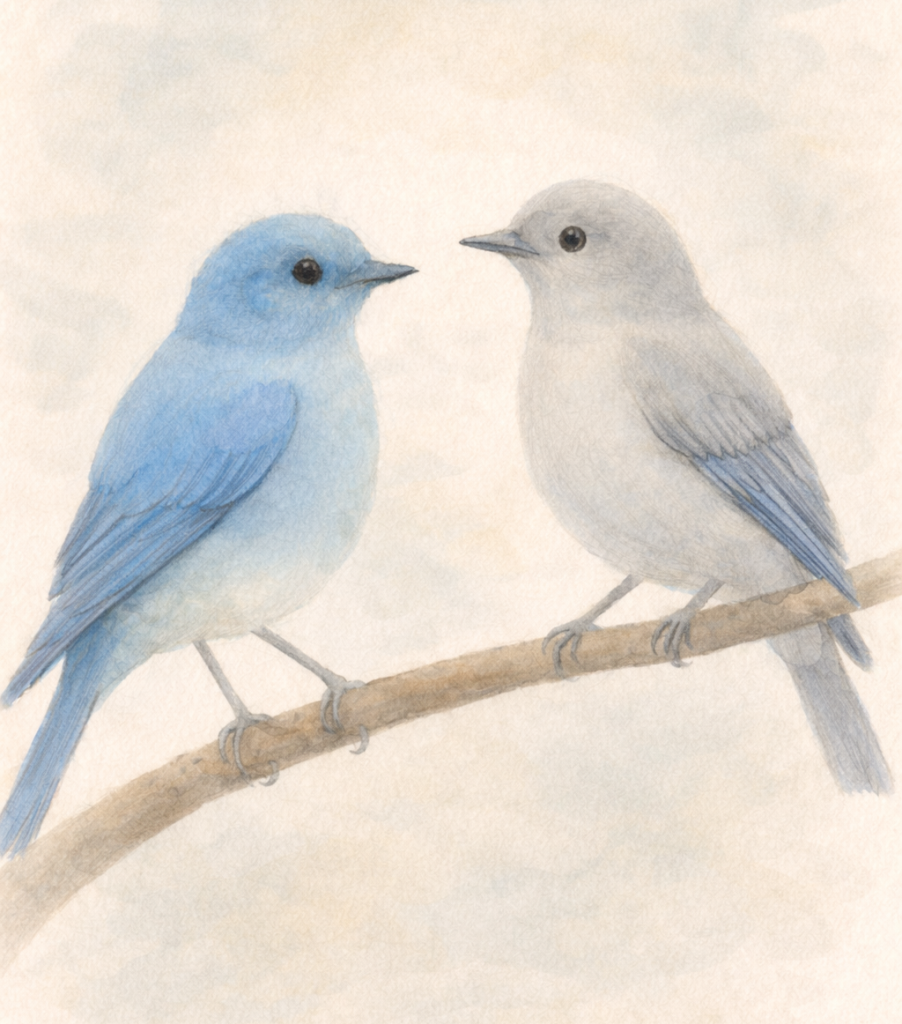
The Mountain Bluebird, native to western North America and the northern Rocky Mountains, lives wild in open landscapes such as mountain meadows, near the edges of forests, in prairie openings, and in areas cleared by forest fire. They nest in abandoned tree hollows and empty cliff openings or in dirt bank cavities when tree hollows are scarce.
The Mountain Bluebird arrives in the Greater Yellowstone area in the very early spring, competing for nesting sites to begin breeding and laying eggs, with emerging first broods in mid-April. Because of their exceptionally early spring arrival, they are portrayed as harbingers of the dawn and happiness. Along with awakening, new beginning, and early-comer opportunist symbolism, the Mountain Bluebird is also often viewed as a symbol of perseverance and resilience due to its ability to adapt to harsh environments, such as the high altitudes where it resides.
The Mountain Bluebird uses its environment to its advantage and possesses the unique skill of hovering to hunt for insects in the sagebrush. Watch carefully, and you may see one hovering about, diving for insects, or perched lightly on a juniper plucking berries, flitting and swooping through the open air across the beautiful Yellowstone landscape.